
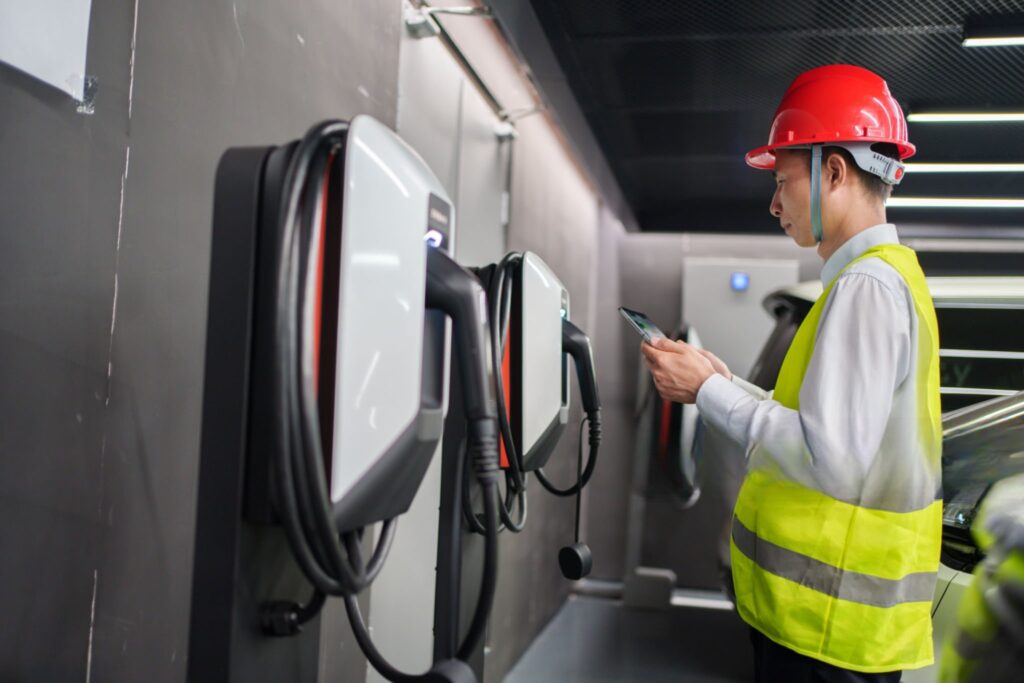
EV Charger Fault Codes (IEC 61851) & Remote Diagnostics – Complete Guide
Charger uptime directly impacts operator revenue and customer satisfaction. An unexpected downtime not only loses charging income but may also drive users to competitors. However, failures are inevitable. The ability to quickly identify common EV charger fault codes and use remote diagnostics can reduce mean time to repair (MTTR) from days to hours.
Based on IEC 61851 and real-world operation experience, this guide lists the most frequent faults for both AC and DC chargers, along with practical remote solutions.
Common AC Charger Faults & Solutions
AC chargers have a simpler structure, but problems still occur. The three faults below account for over 80% of service tickets.
CP Signal Fault (Pilot Fault)
Symptom: Handshake fails between charger and EV, display shows “CP Error” or abnormal blinking.
Causes: Poor CP wire contact, damaged vehicle inlet, faulty control board signal circuit.
Remote solution: Retrieve OCPP logs to check if the issue is isolated. Instruct the user to re-plug the connector 2–3 times. If persistent, a field engineer must inspect the CP waveform (duty cycle should be 5–25%).
Ground Fault (GFCI / RCD Trip)
Symptom: Charging stops seconds after start, backend logs “Ground Fault”.
Causes: Leakage current >30mA, condensation inside the connector, high ground impedance.
Remote solution: Check if the leakage threshold is set too low (e.g., 20mA). Instruct on-site staff to measure PE to N voltage (<5V). If frequent, replace with a self-testing RCD module.
Welded Contactor (Relay Sticking)
Symptom: Charger still shows “Charging” after plug removal, or reports “Contactor stuck” on next start.
Causes: Welded contacts from high-current switching, undersized contactor.
Remote solution: Command forced relay opening remotely. If unsuccessful, de-energize and replace the contactor. Prevention: use UL listed contactors and test every 6 months.

Common DC Fast Charger Fault Codes
DC chargers communicate directly with the vehicle BMS, making faults more complex. Still, most can be analysed via remote logs.
Insulation Failure
Symptom: “Isolation monitor trip” during handshake.
Causes: DC output insulation below threshold (typically >500Ω/V), moisture in connector, vehicle battery insulation degradation.
Remote solution: Check insulation value to identify charger or vehicle side. For charger side, remotely disable the socket and dispatch for inspection. For vehicle side, notify the user.
BMS Handshake Error / Voltage Mismatch
Symptom: Charging protocol fails, backend logs “BMS timeout” or “Invalid voltage request”.
Causes: Vehicle battery voltage outside charger range (e.g., 400V charger vs 800V EV), protocol mismatch (GB/T vs CCS), communication interference.
Remote solution: Retrieve handshake messages (DIN 70121 / ISO 15118). Check voltage strategy table. Perform a remote firmware update to add protocols like CHAdeMO or NACS.
E-stop Triggered
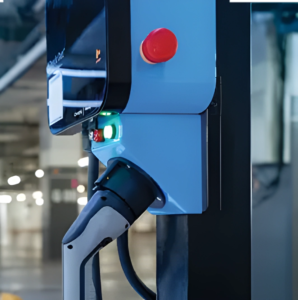
Symptom: Display shows “Emergency stop”, all operations disabled.
Causes: Accidental press or aged switch.
Remote solution: After confirming no real danger, instruct on site staff to rotate the button clockwise to reset. If the fault persists, replace the switch.
Practical Remote Diagnostics Methods
Modern OCPP-compliant smart chargers allow you to handle most faults from your office, using OCPP remote troubleshooting.
Real-time Status via OCPP
Standard commands: GetDiagnostics, GetConfiguration, GetLog
Key variables: ConnectorStatus, MeterValues, FaultCode
Use CMS platforms like Monta or GreenFlux for automatic SMS/email alerts.
Log Analysis Tips
Key fields: timestamp, faultCode (OCPP 1.6J table)
Examples
GroundFailure → grounding issue; OverTemperature → poor cooling; PowerMeterFailure → meter communication lost.
Remote Recovery Actions
Remote reboot: Reset (Hard or Soft)
Remote unlock connector: UnlockConnector
Remote firmware update: UpdateFirmware – roll out in batches (start with 5% of chargers for validation)
Always ensure no vehicle is charging before a remote reboot or firmware update.
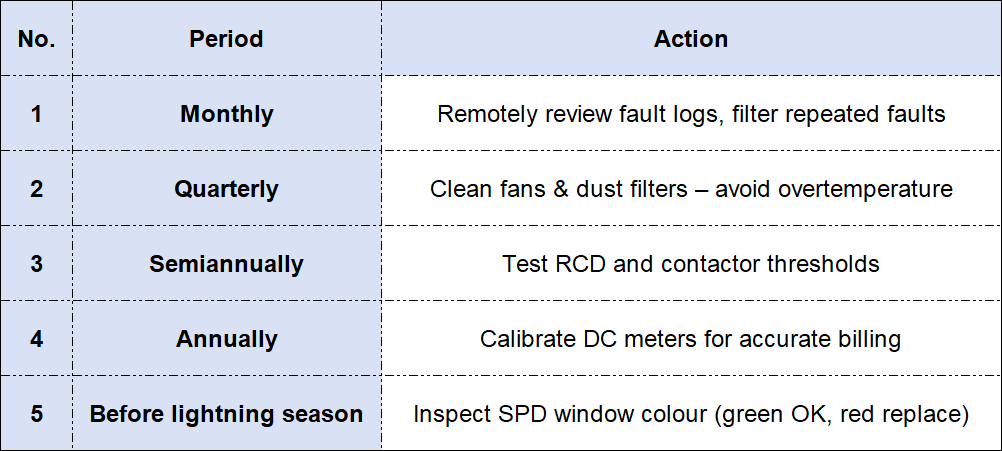
Preventive Maintenance Recommendations
Preventing failures is the real way to reduce costs and improve uptime.
How Our Brand Helps Customers
As a professional EV charger manufacturer, we provide reliable hardware and remote diagnostics tools:
Free fault code quick reference sheet (PDF): covers 40+ OCPP fault codes with solutions.
7×24 remote technical support: engineers ready to analyse logs.
Every charger supports OCPP 1.6J (optional 2.0.1): compatible with mainstream CMS, remote diagnostics ready out of the box.
Conclusion
Charger failures are not a disaster – lack of quick diagnostics is. Mastering the above EV charger fault codes and remote diagnostics methods enables your operation team to cut MTTR by more than 50%.
Need the free fault code PDF or a consultation on OCPP remote troubleshooting? Contact our technical team today.